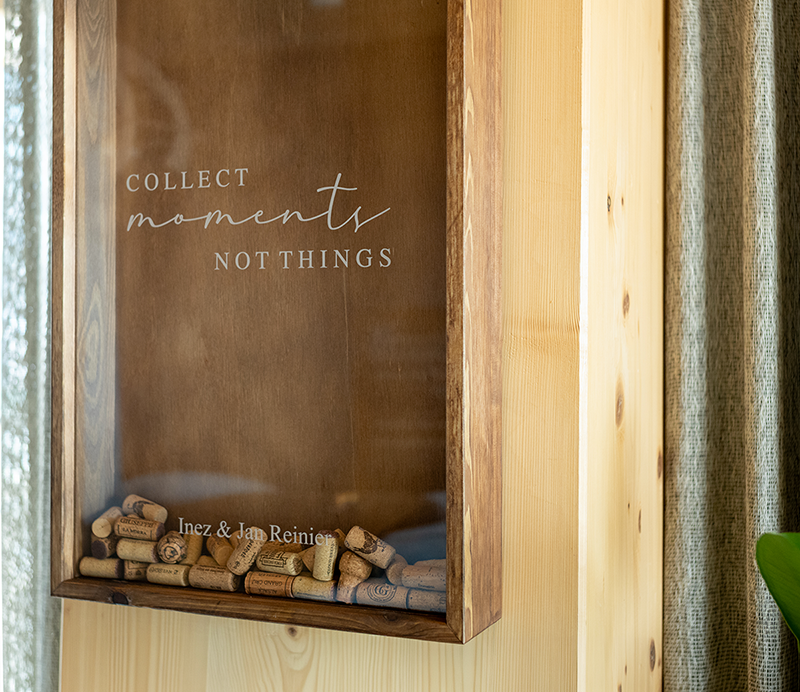
Sustainable living built on a maritime past. At home with the Goskers in Rotterdam.
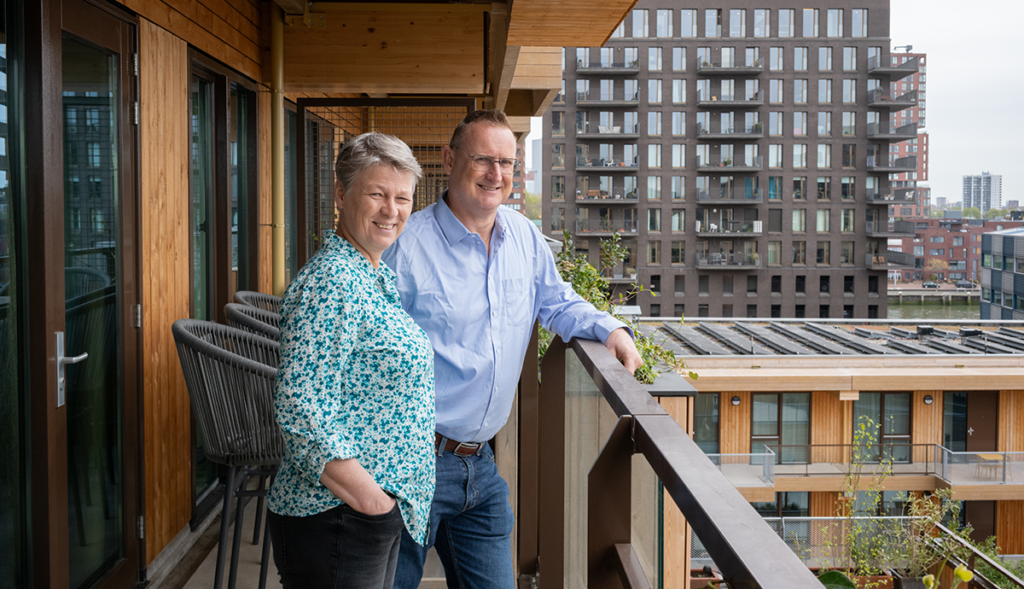
“We had reached a stage in our lives where our children had either already moved out or were close to doing so. When this location popped up, and it had all these sustainable benefits, we decided to go for it.”
Jan Reinier Gosker is a member of the business development team here at Jacobi and has headed up our Jacobi Services business for several years. We got wind on the Jacobi grapevine that he was looking into a new sustainably built home project some time ago, and recently Jan and his family moved in to their new home. We caught up with them to find out what it’s been like.
Hello Jan Reinier, we heard that you have moved into a rather special new living setup in Rotterdam at the end of 2025. A sustainable apartment in a newly built sustainable building right on the river in Rotterdam – we'd love to find out more!
Where did you and your family live before?
From 2006 – 2025, we lived in a city outside Rotterdam. As my kids grew older and started moving out, we decided to find an apartment on the river in Rotterdam.
What prompted the initial move to look for a sustainable property? Did Jacobi's focus on sustainability influence your choice of housing, perhaps?
My answer to the question has two parts. I have been a grandfather for a few years now. Two boys: three years and one year old. That has led me to become a bit melancholic and think more about what the future holds if we continue living as we do and don’t make any major changes.
Rising in Rotterdam, SAWA is an award-winning circular wooden residential building. Instead of refining conventional building methods, the team developed a new system focused on wood, circular design, and integrating nature into the built environment. SAWA has received widespread attention worldwide and is considered a leading example of circular timber construction and nature-inclusive urban development.
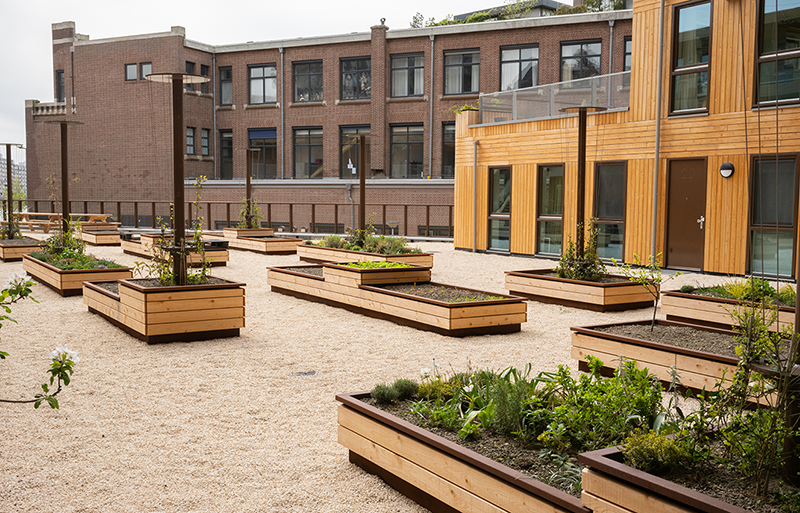
The house is full of sustainable tricks. For instance, a rainwater system that collects water from the roof for use in the community garden.
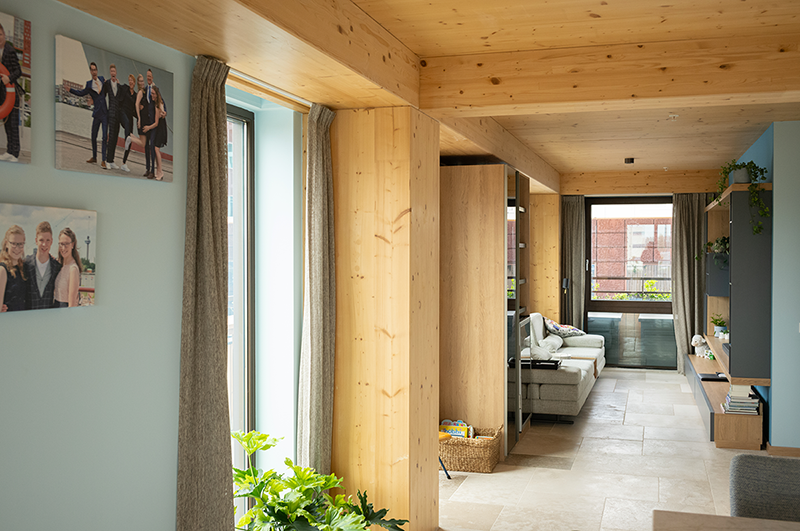
"Throughout the home, you can feel that it is built from wood, which gives the house a very pleasant touch and feel."
The other aspect is that working at a sustainable company fosters sustainability awareness. It's not just the story you tell your customers. You start to think about ‘should my hotel room be serviced every day?’ or ‘what type of food can I buy from my local suppliers?’ These are small things, but many small things added up create a new lifestyle. This sustainability fever is definitely caused by Jacobi.
How did you hear about this house?
We were looking for apartments on the riverside, which are very rare, and came across this new building project. We learned about this real estate online and on social media. I love the adventure of novelty. There is so much in this house that is completely new to me. The sustainability focus is obviously the most fascinating part.
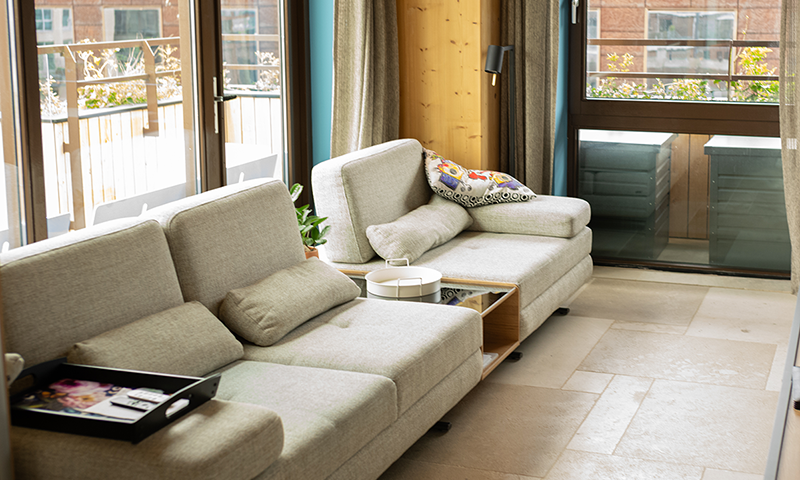
“We spent a lot of time designing the house’s interior before construction, and slowly, we saw our dream come true.”
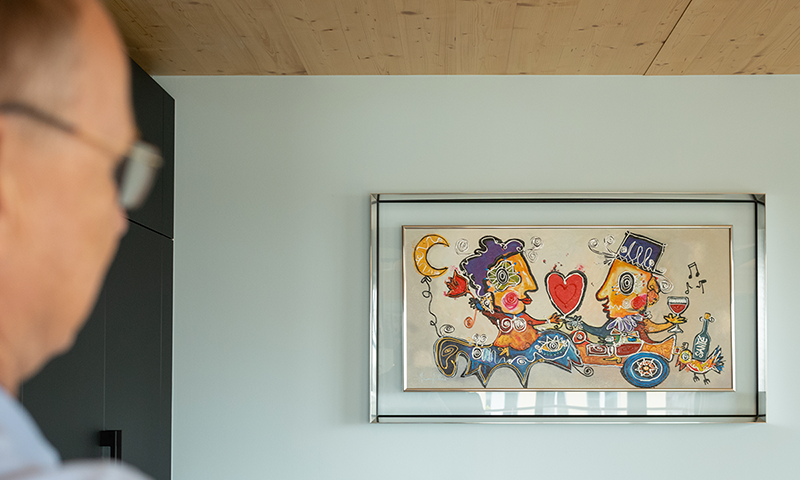
“Living in this house doesn’t mean we have to change our lifestyle. It’s just that a home like this makes you more aware of sustainability issues.”
What is it about the house that makes it a sustainable house to live in?
It’s built without concrete, except for the garage floor, the elevators and the staircases. This house is one of the first residential buildings in the Netherlands to be constructed largely from wood on this scale. Traditional building consumes an average of 220 kg CO2/m2 of building surface. Our apartment building is 12,000 m2 in total, representing 2,560 MT of CO2. Due to the wooden structure, the CO2 used is a fraction of that. It can be assumed that we saved 2,000 MT of CO2 by using this construction method.
There are laws coming into effect in Europe that require buildings to reduce their CO2 emissions from 220 kg per square meter to 130 kg per square meter. That means, with today’s construction methods, you need to step away from concrete. With our wooden structure, we are the pioneers in meeting these upcoming requirements.
And the house is full of sustainable tricks. We have solar panels that handle cooling and some standard overall energy use, like the garage door, the elevators, and these types of systems. We also have a rainwater system that collects water from the roof for use in the garden. And we have installed a battery system that helps level out energy use by storing excess energy and releasing it when demand is higher.
What are the neighbours like? Do they all share the same dedication to living sustainably?
The apartment building consists of 108 units. 38 are owner-occupied, and 70 are rental. My neighbours rent their apartment. The criteria for the rental units were: 1) working in a ‘critical’ profession for the city of Rotterdam, such as a teacher, nurse, or police officer; and 2) having an interest in sustainability. This mix of owned and rental apartments has created a diverse community, with residents of different ages and life stages – from young professionals to more established households.
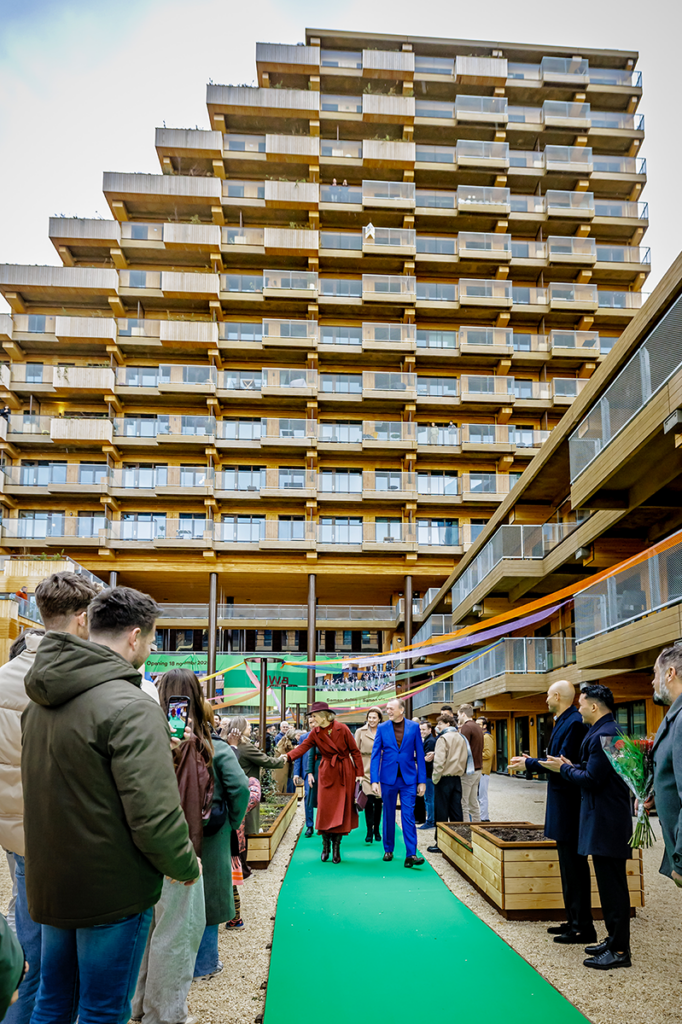
With its strong sustainability focus, the project has also become increasingly important to society as a whole. This was reflected in the visit of Queen Máxima of the Netherlands, who attended the building's inauguration.
The property developer received 1,800 applications to purchase one of the 38 owner-occupied flats. The overarching idea is to build a community that fosters a sustainable mindset, so when we applied to buy our flat in this sustainable house, we had to explain why we should be allowed to buy it.
The fact that I work for a sustainable company was a strong argument in our favour, as I could talk about Jacobi’s sustainability efforts and our focus on coconut charcoal. Also, my wife is a nurse, which helped.
Besides how the house is built and designed to be sustainable, have you made any other changes? Or is there anything else you’ve needed to consider living more sustainably?
Well, I cannot live in one of the world's most sustainable buildings and drive a diesel car, so I will need to change to an electric car. Also, we have a community garden that is run together by all of us. I’m not being forced to make any changes. It's just that living like this makes you more aware of sustainability issues.
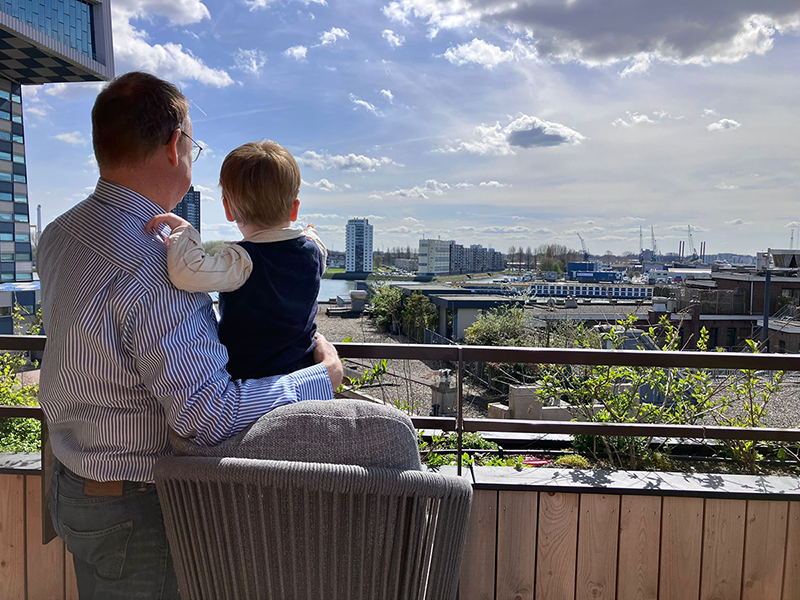
“Becoming a grandfather to two boys has made me think more about what the future holds if we don't make major changes.”
Since moving in, what would you say is your and the family's favourite aspect of living there?
The view over Rotterdam harbour is truly something special. Also, throughout the home, you can feel that it is built from wood; the wooden ceilings give the house a very pleasant touch and feel. We spent a lot of time designing the house’s interior before construction, and slowly, we saw our dream come true.
Anything else you’d like to tell us about your new home that you think people may find interesting?
I am leading a project called carbon credits. Our house contains 2,560 MT of CO2. This has a value. 2,560 MT is enough for a small company to extend and compensate for CO2 for 3–5 years. Companies can buy this if they want to grow. We are trying to sell this carbon off to companies that are building sustainably, in accordance with the Oxford Principles for credible carbon offsetting.
We are the first high-rise wooden apartment building in the EU, and we are trying to start a domino effect of sustainable building by offsetting our inherent CO2 emissions. It’s really pioneering work, which I love as a business development guy.
We’ve set ourselves a clear objective: we won’t just sell to any company with questionable ambitions. We will only partner with companies that genuinely take CO2 reduction seriously.

SAWA house
LOCATION: Kratonkade, Rotterdam
ARCHITECT: Mei Architects and Planners
DEVELOPER: NICE Developers ERA Contour
SCALE: 12.500 m2 Gross Floor Area
AWARD: Winner of the BNA Best Building of the Year 2026
Jan Reinier, thanks for taking the time to sit down with us for this interview. Congratulations on a successful project and we hope yourself and the rest of the family will be very happy in your new home for many years to come.
To find out about other sustainability project stories here at Jacobi, you can visit jacobi.net/Sustainability-journey/