

Creative Purification Solutions Reduced CO₂ Emissions by 1,000 Tonnes
The key was the use of coconut-based activated carbon
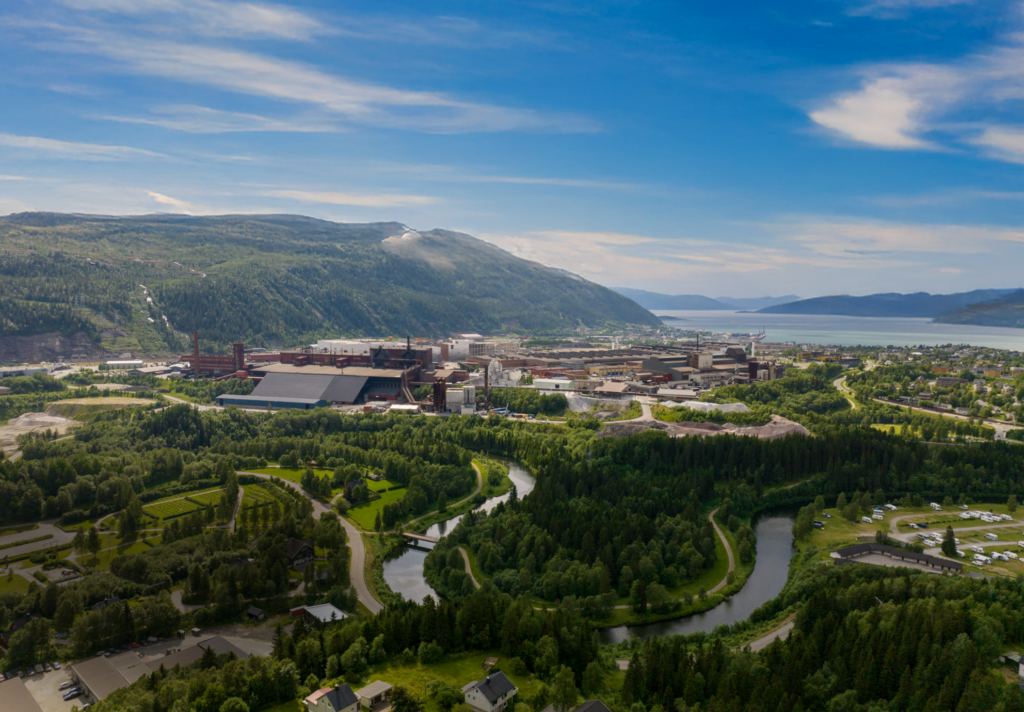
The steelworks in Mo i Rana was established with the aim of securing domestic steel production and supporting economic development in northern Norway. Today, it’s regarded as one of the cleanest steel production facilities in the world.
From above, 7 Steel Nordic’s steelworks facility is an impressive sight. Here, scrap steel equivalent to two Eiffel Towers per week is converted into high-quality steel products. We met with the team who developed improvements to the production process that greatly reduced the carbon footprint of the company’s steel production.
7 Steel Nordic is the leading producer of reinforcing steel in the Nordic region, operating a smelter and rolling mill in Mo i Rana, near the Arctic Circle in northern Norway. It’s best known for making sustainable and climate-efficient reinforcing steel – used in construction and commonly known as rebar – from recycled steel scrap. The company also constantly strives to reduce negative impacts on the environment from its operations.
The seed of Jacobi's collaboration with 7 Steel Nordic was planted in 2012. Olaf Brastad, a Senior Adviser at the Oslo-based Bellona Environmental Foundation, ran into Geir Markussen, a Partner at Sparks, the Norwegian distributor for Jacobi, as he was returning from a seminar. A leading expert on environmental issues with a connection to Mo i Rana, Brastad spoke positively about 7 Steel Nordic’s sustainability efforts. The discussion stayed with Markussen, and he eventually reached out to 7 Steel Nordic in 2014.
An important local force that overcame its major environmental challenges
The steelworks in Mo i Rana was established as a state initiative after World War II, with the aim of securing domestic steel production and supporting economic development in northern Norway. Over time, it became a major employer in the city and an important contributor to the local economy. At the same time, steel production led to environmental impacts, particularly in the early decades, when emissions and discharges were subject to more limited regulation. Since then, extensive environmental measures have been implemented, and today the steelworks in Mo i Rana is regarded as one of the cleanest steel production facilities in the world.
“The fact that 7 Steel Nordic is controlling their air emissions of mercury and dioxins, as well as cutting 1,000 tonnes of CO2 annually, is a significant milestone for the entire industry.”
Olaf Brastad, Senior Adviser at the Bellona Environmental Foundation.
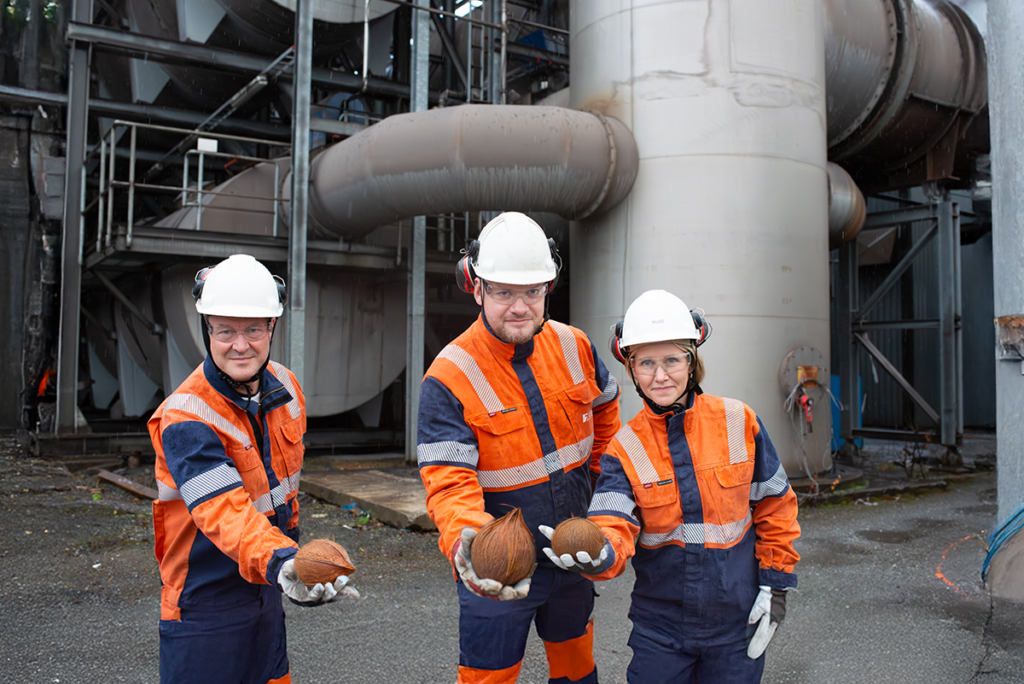
Meet Per Johan, Morten and Ina, the core team behind the improved processes at 7 Steel Nordic. Switching to coconut-based activated carbon in the filter significantly lowered the emissions of CO2.
“This is an excellent example of what can be achieved through targeted cooperation,” says Brastad. “I have been following this company for 25 years. Until the production change in 2008, when they installed the new filter, they released excessive levels of mercury into the air and were also a major contributor to extensive airborne dust problems in Rana. The fact that 7 Steel Nordic is controlling their air emissions of mercury and dioxins, as well as cutting 1,000 tonnes of CO₂ annually, is a significant milestone for the entire industry.”
Updated emission limits required new solutions
According to Per Johan Högberg, Environmental Manager at 7 Steel Nordic Manufacturing, it wasn’t long after Geir Markussen got in touch with the company that they needed new approaches to sustainability.
"In 2008, we installed the filter we are talking about today, specifically to reduce air emissions of mercury and dioxins that occur during the smelting process. By 2015, we realised there was much to do to improve the filter operation and better control emissions to avoid overruns. That accelerated my discussions with Sparks and Jacobi about these issues,” recalls Högberg.
“By 2015, we realised there was much to do to improve the filter operation and better control emissions to avoid overruns. That accelerated my discussions with Sparks and Jacobi.”
Per Johan Högberg, Environmental Manager at
7 Steel Nordic Manufacturing
7 Steel Nordic engaged Sparks and Jacobi to assist with some operational considerations. The company was adapting to tighter emissions requirements while also managing the costs associated with operating three changeouts.
“We had our environmental permit updated in 2016–17 by the Norwegian authorities, which imposed stricter limits on dioxins. That also meant we struggled to produce within the limits with the routines we had; at that time, we exchanged the carbon twice every year,” says Högberg. “After our environmental permit was updated, we realised it wasn’t enough, so we had to switch to three changeouts of carbon per year to meet the dioxin emission limit. There was an imbalance: we kept mercury emissions within very good margins but struggled with dioxin emissions. We started looking at how we could change this to better align with the emission limits and to return to two changeouts per year.”
“Switching to coconut-based activated carbon significantly lowered the emissions of CO2.”
Holger Fuchs, Head of the Application Support Team at Jacobi
Innovative thinking addressed some challenging problems
According to Holger Fuchs, Head of the Application Support Team at Jacobi, the main challenge in this case is the relatively high operating temperature, as mercury, dioxins, and furans needs to be removed from the gas. Dioxins and furans are generally not the limiting factor at elevated temperatures – operation up to around 200°C is well established. Mercury, however, is more difficult to capture under these conditions and therefore requires the use of an impregnated carbon.
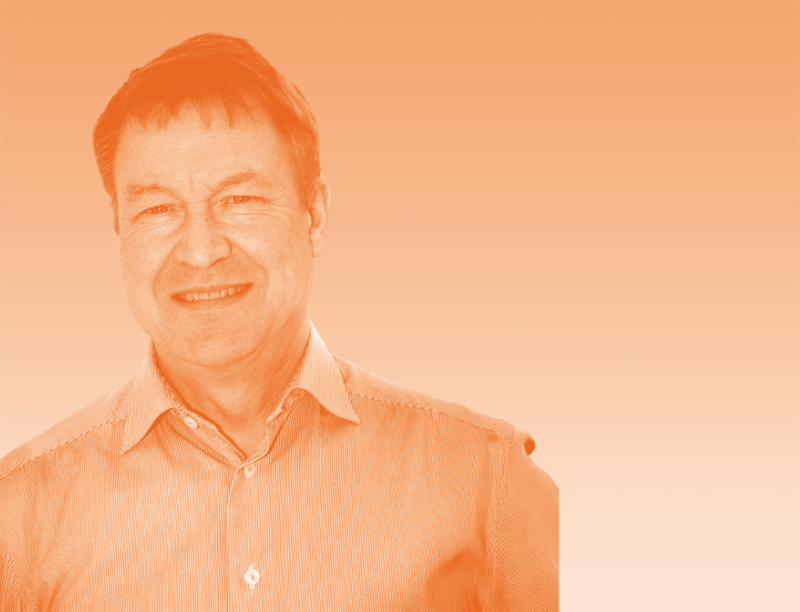
Per Johan Högberg
Environmental Manager at 7 Steel Nordic
Manufacturing
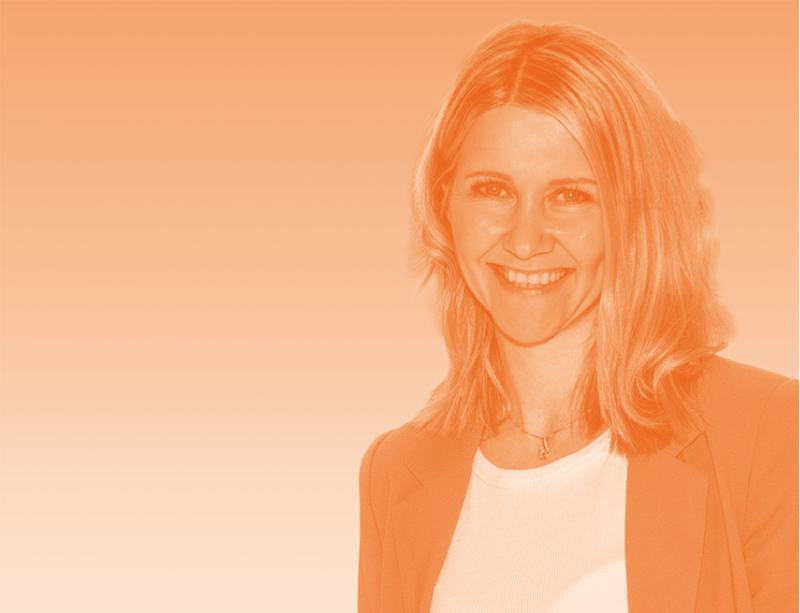
Ina Ruud
Purchasing Manager at 7 Steel Nordic Manufacturing

Olaf Brastad
Senior Adviser Specialised in Industry and Waste policy, at the Bellona Environmental Foundation
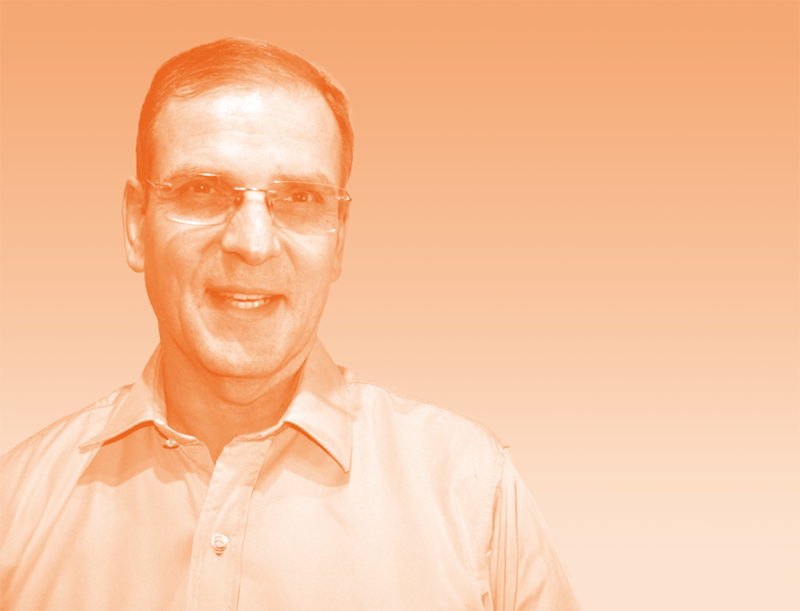
Holger Fuchs
Head of the Application Support Team at Jacobi

Morten Rachow
Maintenance Planner for the Mechanical Department at 7 Steel Nordic Manufacturing

Geir Markussen
Partner at Sparks
“To achieve high adsorption capacity, a suitable impregnation chemistry is required, however, not all conventional options are stable under the conditions we are facing here,” says Fuchs. “As a result, we had to identify and develop an alternative approach to effectively remove mercury from the gas. That was the starting point.”
From the beginning, Sparks and Jacobi worked with coal-based material, which was the standard solution under such conditions. But when Jacobi decided to make a major pivot in 2023, it would ultimately lead to a new purification solution for 7 Steel Nordic.
“We started switching from coal-based carbon to a coconut-based material,” says Fuchs. “First, with the non-impregnated grade to ensure we were doing well here and that the material was suitable as well. Then, at the beginning of 2025, we also changed the KI-impregnated coal-based material to coconut carbon. This was a move that significantly lowered the emissions of CO₂.”
Today’s results and status for 7 Steel Nordic
7 Steel Nordic has run on-site tests to monitor performance, and Jacobi's laboratory has helped by analysing samples; the results are promising.
“Based on the technical quality of the coconut carbon, we can see improvements in the carbon’s stability within the filter, allowing us to run it for longer,” says Morten Rachow, Maintenance Planner for the Mechanical Department at 7 Steel Nordic Manufacturing. “It’s very costly to stop the process and shift the filter material, and we wanted to return to two changeouts per year, which we now have.”
Replacing the filter is not a big operation in itself, but it does require careful planning. The plant has to be shut down at the right time, and it’s the loss of production during that downtime that really drives the costs.
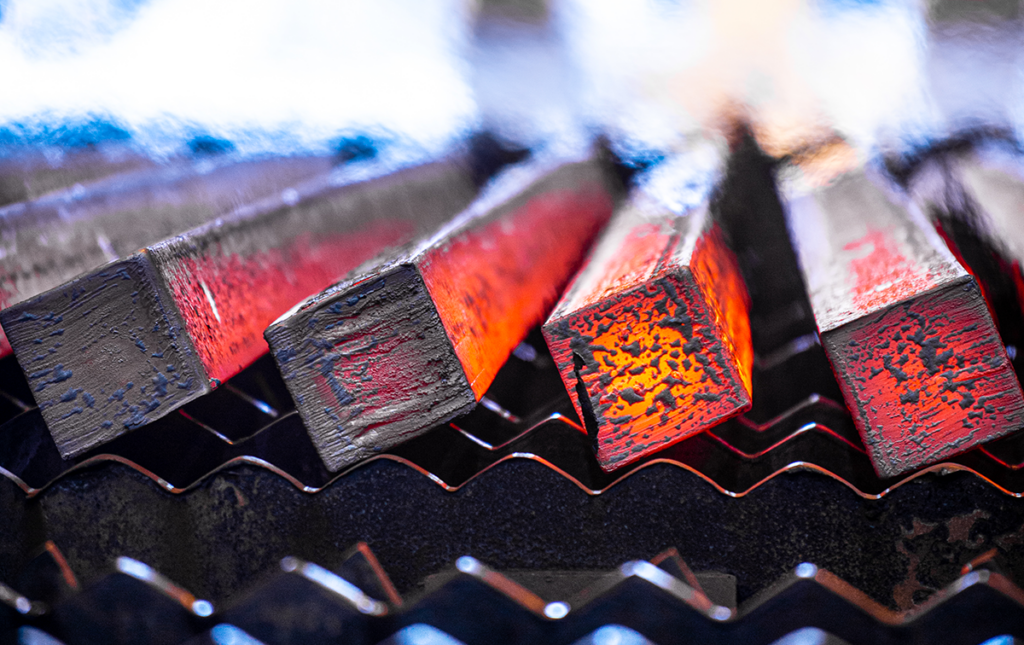
The billet is a semi-processed steel product obtained directly from 7 Steel Nordic’s electric arc furnace steel mill, used for the manufacturing of finished steel products.
“This also needs to be taken into account in the overall assessment. When we opened the MRU (Mercury Removal Unit) to replace the media, we saw that it had settled nicely and stayed stable in the bed. With the previous carbon, it tended to shift in the chamber, so we had to go in and inspect and adjust it more often. The coconut-based carbon is more stable, which means less need for that kind of follow-up,” says Rachow.
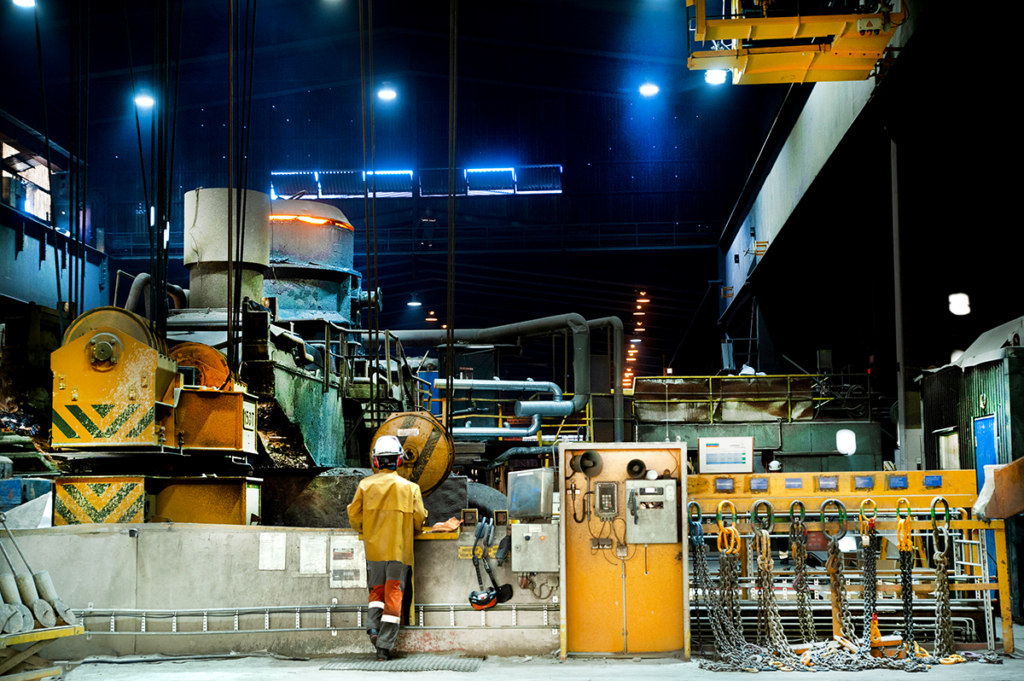
7 Steel Nordic is the leading Nordic steel company, offering one of the most sustainable and climate-efficient reinforcing steel available on the market.
Calculations show that making the switch to Jacobi’s coconut-based solution has cut 1,000 tonnes of CO₂ from 7 Steel Nordic’s annual emissions. Of course, some may wonder how meaningful an achievement that is in terms of sustainability.
“Reducing 1,000 tonnes of CO₂ from a single product in our production process is significant, and we are satisfied with this result,” says Per Johan Högberg.
“It shows that we try to find all kinds of projects that could lower our CO₂ impact,” says Purchasing Manager, Ina Ruud. “This single project will have a significant impact on our emission levels. It has nothing to do with pricing or costs, and it’s not affecting our CO₂ quotas. So, this is just an environmental effect, which is great.”
A collaboration that pushes boundaries and develops our sustainability work
Our vision at Jacobi is to have a positive impact on the world. With our Go Green initiative, we’re pushing to innovate solutions with the smallest carbon footprint. That’s why we invest heavily in coconut-shell-based activated carbon and other renewable products. But how strong is our customers’ desire to invest in sustainable solutions?
“A reduction of the CO2 emissions by 1,000 tonnes per year and a reduced number of costly media changeouts have been some of the benefits of switching to coconut-based carbon.”
Ina Ruud, Purchasing Manager at 7 Steel Nordic Manufacturing
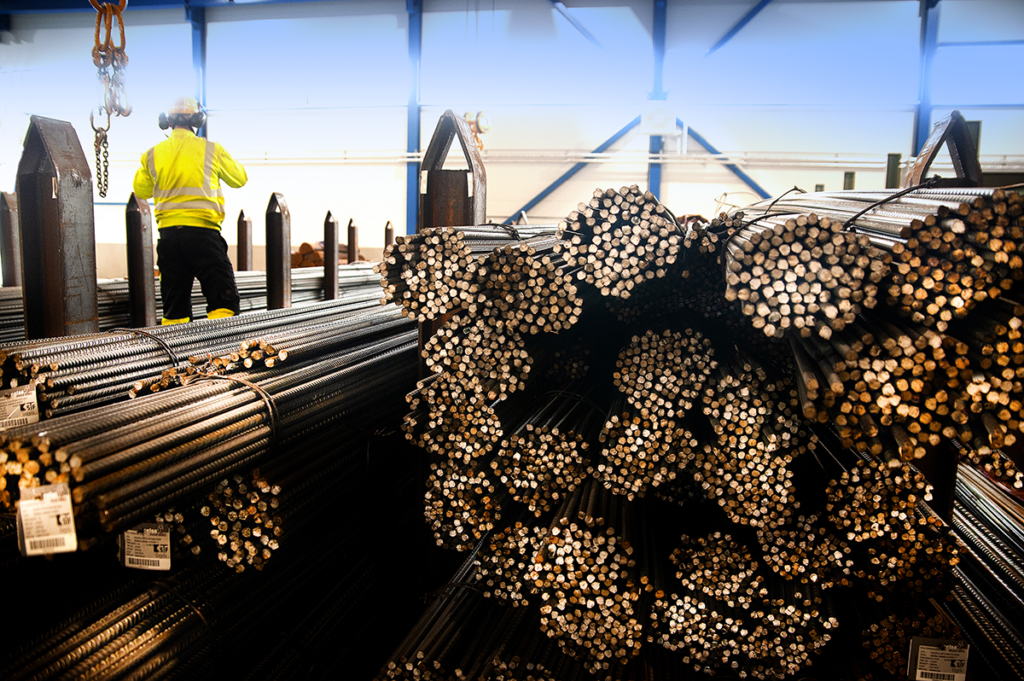
7 Steel Nordic recycles scrap iron into Europe’s most sustainable reinforcing steel.
“Being able to offer sustainable alternatives is far more important now than it was five years ago," says Linda Magnusson, Nordic Sales Manager at Jacobi. "But there needs to be tangible benefits for companies if they are to be persuaded by sustainability arguments. The properties of coconut charcoal or reactivation, for example. 7 Steel Nordic is an important client for us, both in terms of volumes and the development of new solutions. Usually, it’s quite difficult to establish a relationship like the one we have with 7 Steel Nordic, where we collaborate on new solutions and share data. Geir and Sparks have done a great job here. Reaching this stage, saving 1,000 tonnes of CO₂ per year feels rewarding.”
How has the reduction of the CO₂ emissions by approximately 1,000 tonnes been calculated?
According to Jacobi’s Product Carbon Footprint (PCF) Report, prepared for Sparks in July 2025, coconut-based activated carbon has a carbon footprint of 5.46 kg CO₂-equivalent compared to 11.8 kg for coal-based activated carbon. This was the baseline for the calculation to determine reduced carbon emissions, based on the volume that 7 Steel Nordic consumes per year. To give you an idea of what a reduction of 1,000 tonnes of CO₂ amounts to, you could drive a car for 4.35 million kilometres before you have emitted 1,000 tonnes of CO₂.
COLLABORATION AND
INNOVATIVE THINKING
7 Steel Nordic
7 Steel Nordic produces sustainable and climate-efficient reinforcing steel by recycling steel scrap in an electric arc furnace powered by clean, renewable hydropower and using the most environmentally friendly technology available whenever possible.
Sparks
Sparks help customers reduce their CO₂ footprint by substituting their current products and in-use chemicals with environmentally friendly alternatives, while simultaneously recycling their waste.
Jacobi Group
Jacobi is the world’s largest manufacturer of sustainable coconut shell-based activated carbon, offering a range of complementary ion exchange resins and filter service solutions.
Bellona
The Bellona Environmental Foundation is an international science-based non-profit organisation headquartered in Oslo, Norway. Founded in 1986 as an action and protest group, Bellona has evolved into a recognised technology- and solution-oriented organisation.
We would like to extend our sincere thanks to Sparks, their client 7 Steel Nordic, and the Bellona Environmental Foundation for taking the time to participate and share your valuable insights. We look forward to further aligning our focus on the environment and continuing our collaboration to deliver more sustainable solutions.